Every year, there’s a career fair at my university. At the fair, the companies SWARM the software engineers. Seriously: If you want 5 free power banks, movie tickets etc, go to a career fair, wear a name tag saying “software engineer” and you’re golden.
It’s no secret: Software engineers are in high demand. And that also means that we should choose our job with care.
Because at some jobs, you are a ressource that needs to be minimized. A cost. At other places, you are a key player that ensures the success of the company. A way of creating profit.
In this article, I’ll give you a subtle distinction that will help you find a company that you will enjoy working at, who will invest in you and give you interesting work. It’s written from the point of view of a software engineer. But the distinction is probably useful no matter your career.
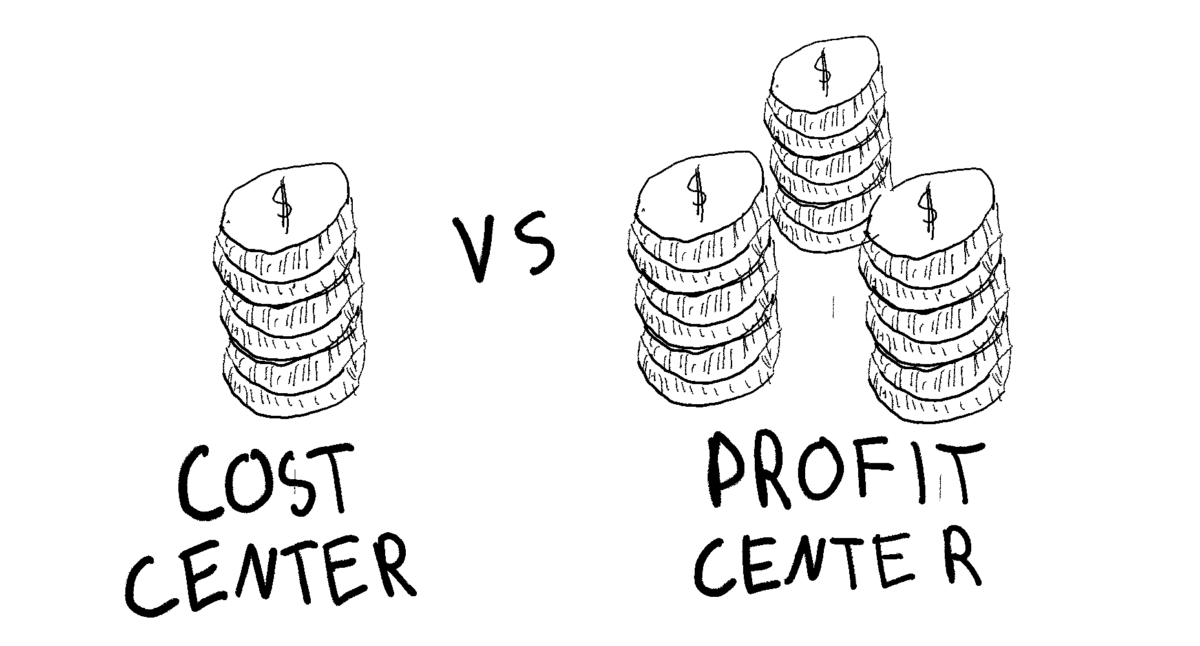
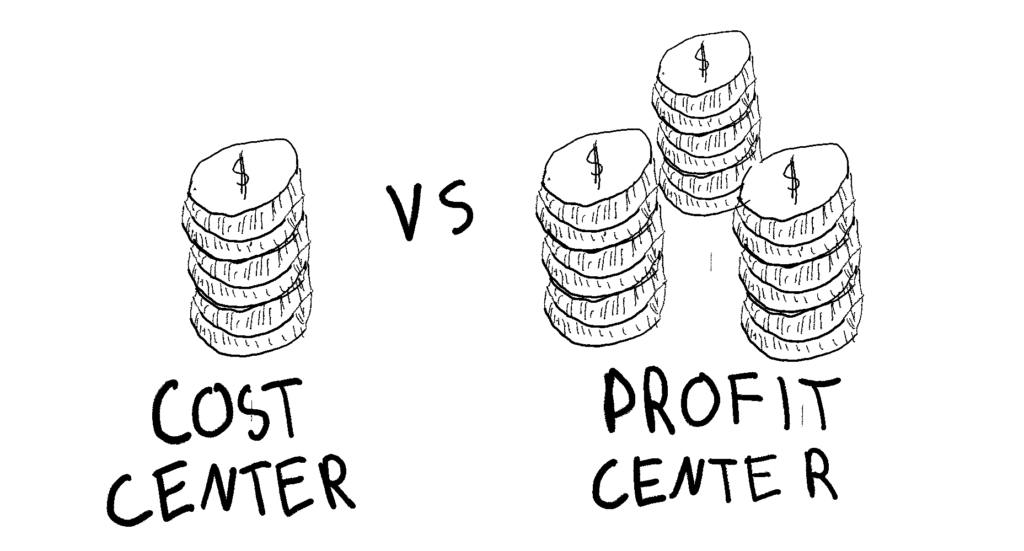
In order to choose between companies, you need to know the difference between a cost center and a profit center:
- A profit center creates the profit for a company. It’s developing the app that your company sells to their customers, or doing sales to bring in new customers. They bring in the money and are the basis of the company’s success.
- A cost center drives the cost. Examples are the legal department or HR-department of a software company: They are crucial, but they don’t determine its success. They don’t bring in the money – they are a liability, rather than an asset.
As we will see, working for a profit center or a cost center sets you up for two drastically different ways of working.
Working for a cost center
Most developers have jobs working at cost centers. A cost center can be seen as part of the support network in a company.
As a developer at a cost center, you might integrate internal systems with one another. Or you might make an application that HR can use to simplify their work. Or manage the internal message board.
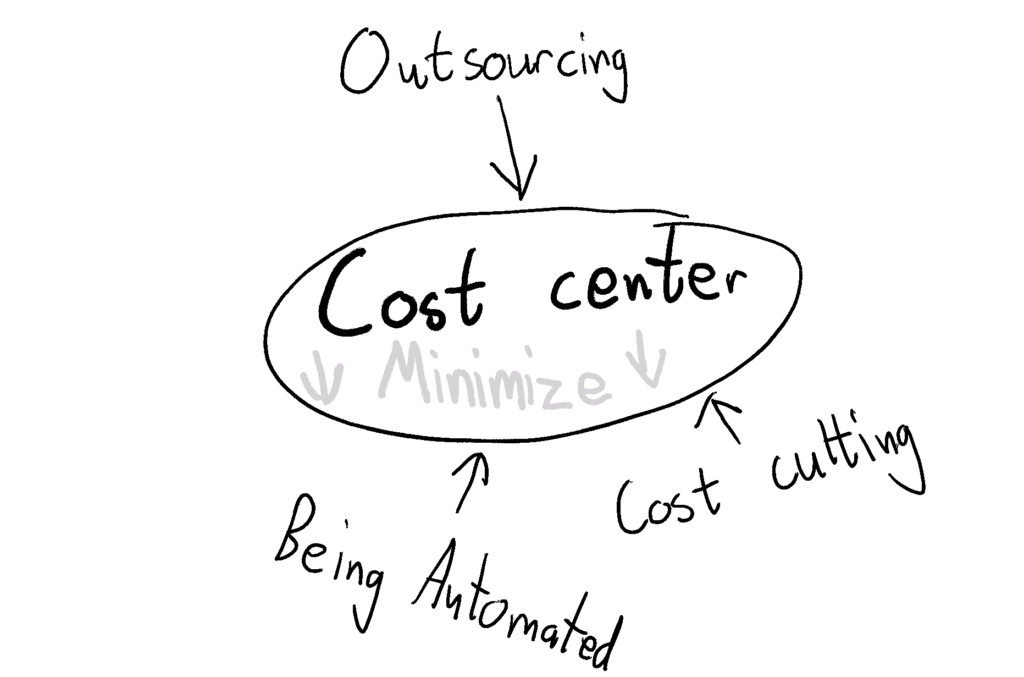
You are working to support the people who are bringing in the money. And while you might be doing an excellent job, your outlook is limited by your position. Your work-life might be defined by:
- Strict budgets and cost cutting
- Outsourcing
1. Strict budgets and cost cutting
When you are working in a cost-center, your department will usually have a small budget. After all, in the eyes of the company, you are working in a support role. If you want to receive expensive training or certification, you’ll have to be persuasive. Your role is a part of a zero-sum game.
If the company is growing and doing well, working in the cost center might be fine. But long-term, you will have problems.
When the company starts stagnating or having problems, they will start to look into how they can improve their profitability. How do they do that? Two ways: Lower costs and increase profits. They won’t fire their most productive salesman. But you, the person working on their internal system and providing “nice-to-have”-solutions? You’ll be let go.
2. Outsourcing
If you take a close look at the market, you’ll see more and more companies off-shoring or near-shoring their development teams. And while you’re probably a great developer, competing against someone who is paid one sixth of you is practically impossible.
Think about it: It’s almost never the technical consultancies or software companies outsourcing the bulk of their developers. It’s always the companies in which IT is a necessary evil to keep the wheels running.
Takeaway: Cost centers are made to be minimized
To sum it up, cost centers are made to be minimized. A company would never hire 5 more attorneys than they need just for the sake of it. And the same is true about developers: If you are working at a cost center, you are waiting to be outsourced and your working conditions will probably be worse.
Working for a profit center
When you are working for a profit center, you are working in the part of the company that brings in the money. You might be working on a product or developing a solution directly for your client. If you stopped coming in to work tomorrow, the company would lose money.
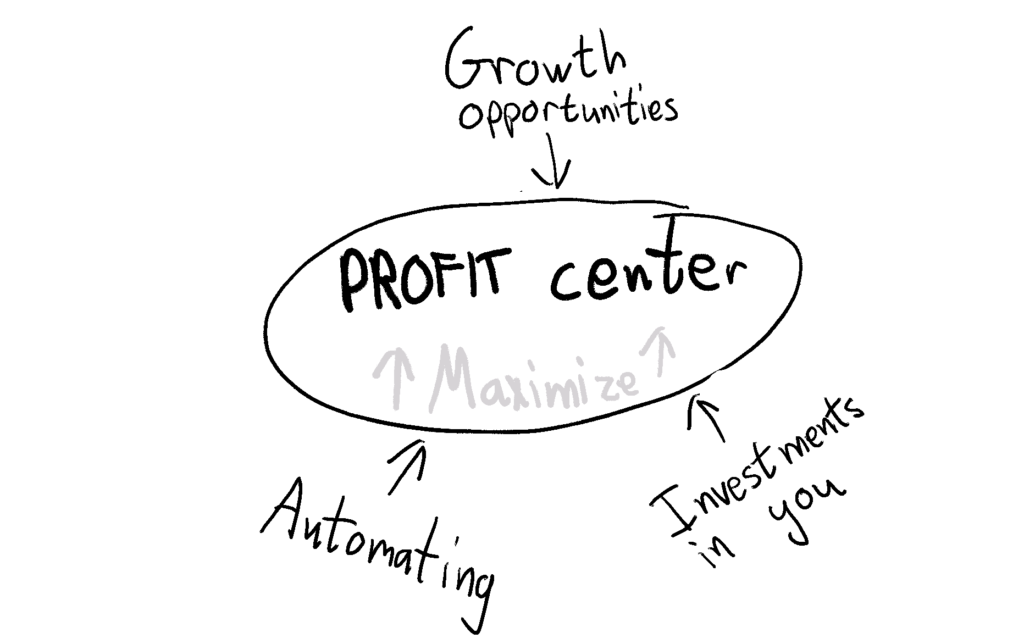
Your work-life will be defined by:
- Investments in your development
- Growth opportunities
1. Investment in your development
If you are working in a profit center, there will be time and money to be invested into your development. After all, the work you do is a prerequisite for the company’s success. It’s not a nice to have, it’s a NEED to have.
The budget of your department will usually be plentiful, and you will have the funds to pursue internal and external training. If you increase your skills, it will result in more money on the bottom line. That’s the reason why you are being treated better.
And if your company starts having trouble, you’ll probably be among the last to go. After all, if there is no-one to support the app they sell, they will go out of business quickly.
2. Growth opportunities
In a successful company, there will always be new things to try out. And if you are doing well at your job, you will get more chances to prove yourself.
You will work on new and exciting projects, and when your skills increase, you might even end up leading a few of them.
Takeaway: Profit centers are made to be maximized
How to recognize a profit center
A few questions/criteria that can help you recognize a profit center:
- Does the company make money directly from what I do?
- Are there customers outside of the company using my work?
- If the company had problems tomorrow, would I be considered a part of the crucial core?
Takeaway
Whether you work at a cost center or a profit center might be one of the key things that impact your life at work. Be cognizant about the difference and try your best to move towards a profit center.
That will set you up for the future, and (hopefully) help you learn and grow.
