In the workplace and when using different programs, there is a lot of talk about learning curves. Some pride themselves on having a steep learning curve. Others on being user friendly and having little to no learning curve.
In this article we’ll dive into the different learning curves – and which types of skills you should focus on developing.
Sports have very different learning curves
Sports are a great example of a place where the learning curves are drastically different. If you are running and are in bad shape, you can always walk. Or you can run slower or faster. Changing the difficulty is fairly easy. That’s the same with soccer – most people can kick a ball.
On the other end of the spectrum is hockey. Before you learn how to ride skates, you are pretty much unable to move. You look like Bambi in the Disney film (that’s the point where I’m at). If you want to make it easier, there is no tractable way of doing it.
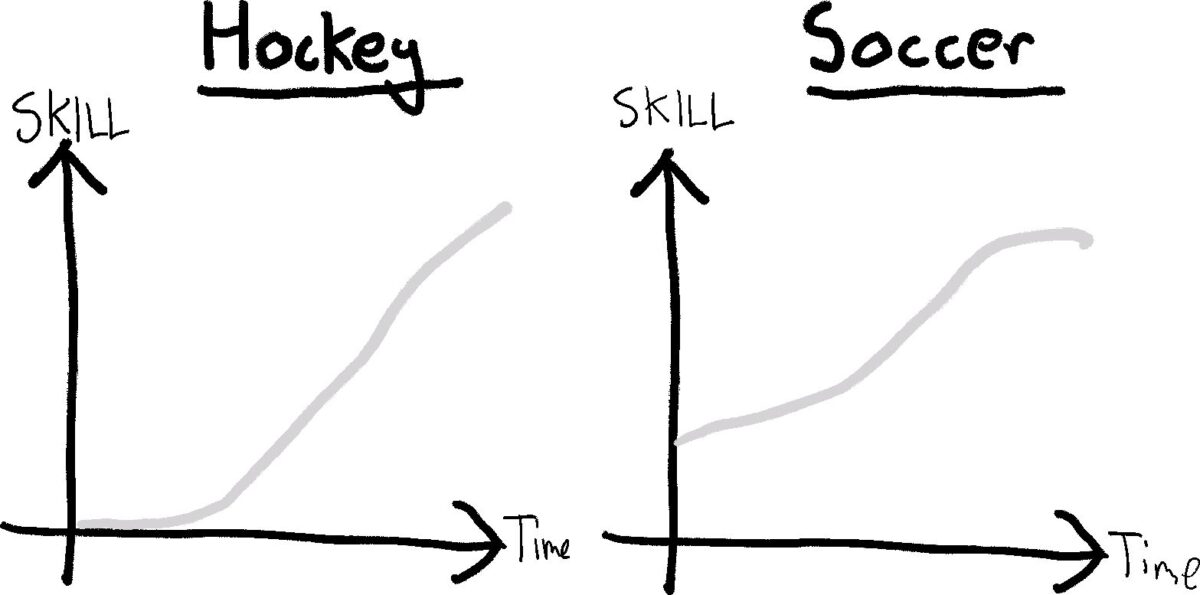
The learning curve of hockey and soccer/running look something like this:
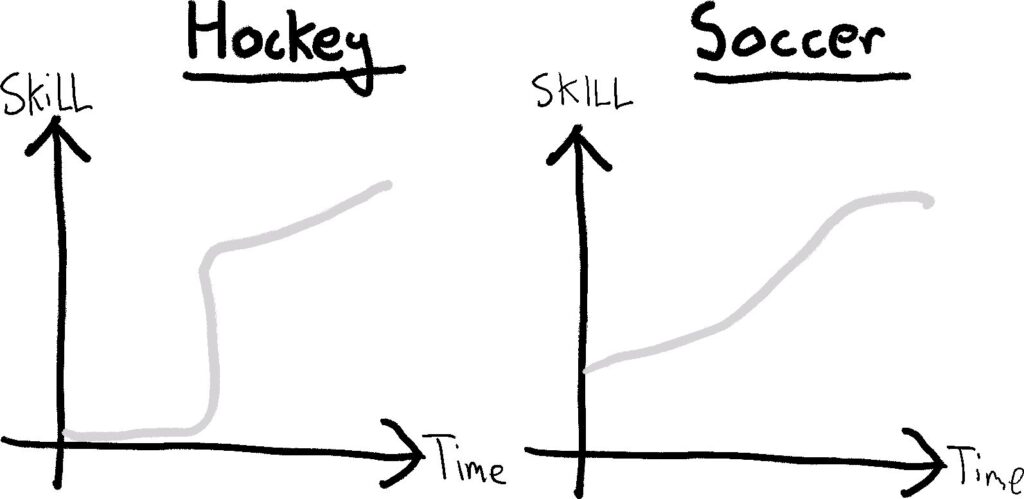
In running, the average person is within the same league as the pros. The pros do what the average person does – just faster and farther. In hockey, the average person would get absolutely demolished. After a tiny shove, they would get sat down and most likely hurt badly.
This is not because hockey is a harder sport in absolute terms – the learning curve is just different. If you want to be able to beat the average person, you should choose a skill where the average person is atrocious.
This doesn’t only ring true for sports, but for careers as well.
Learning curves in careers
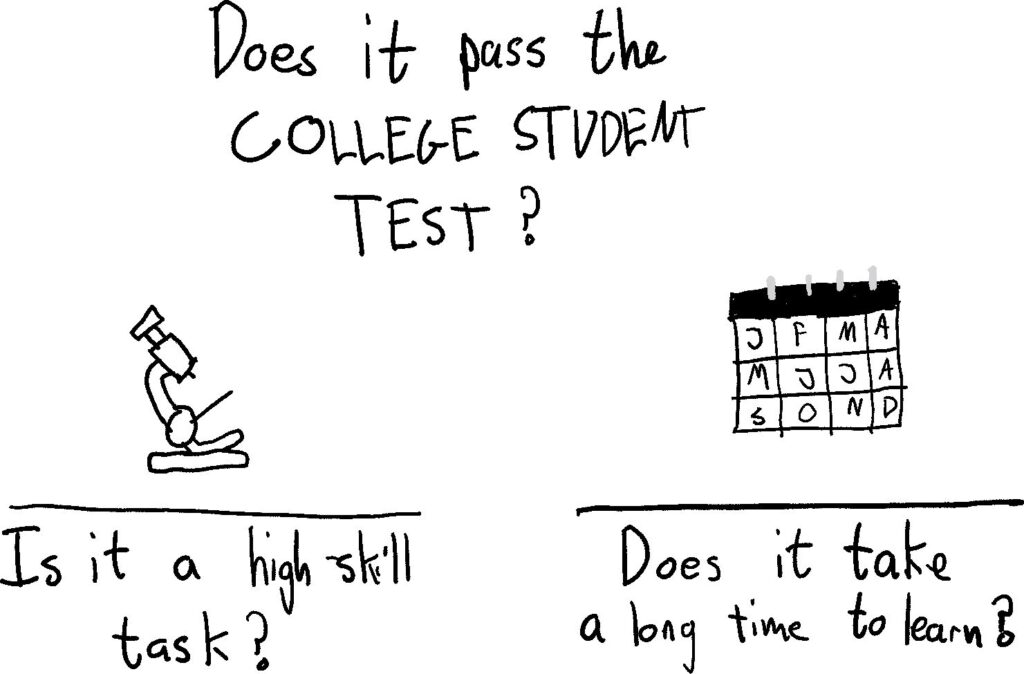
Cal Newport, the author of Deep Work has a useful concept, that I call the College Student Test. It says:
How long would it take (in months) to train a smart recent college graduate with no specialized training in my field to complete this task?
Cal Newport
In our careers – and especially while studying – we should focus on finding skills that pass the College Student Test.
There are two ways in which your task can fail the college student test: It can be 1) Easy to perform (low-skill) or 2) Easy to learn (low time investment).
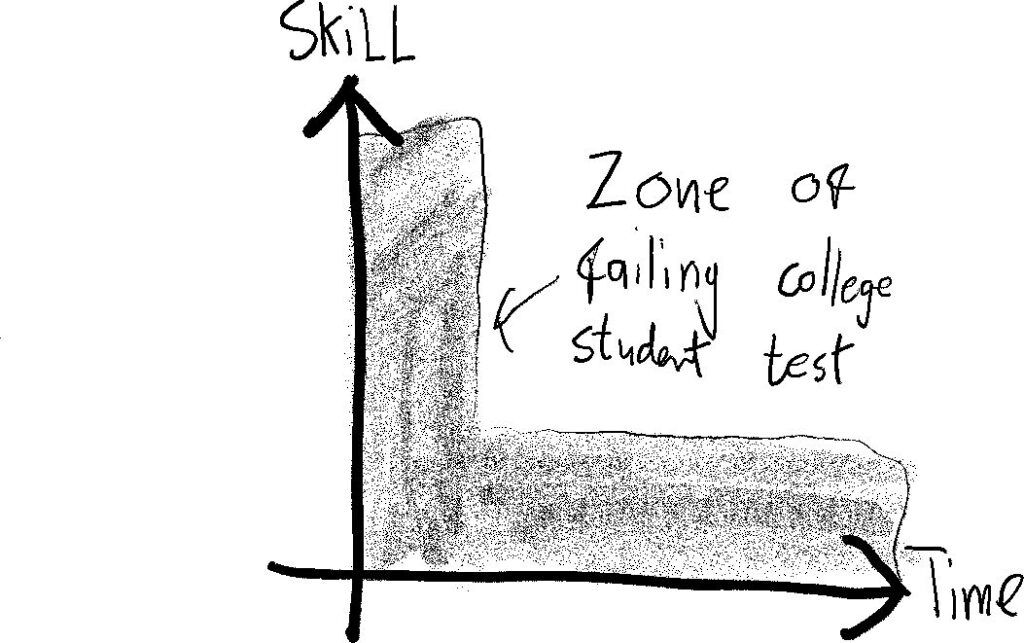
High skill/long time to learn
Here are a few examples of skills that would and wouldn’t pass the College Student Test.
Studying university-level math: A friend of mine is studying mathematical modelling and computing. Whenever she says “I’m studying math”, people respond “I could never do that” or “I’m glad it’s not me”. Even if you gave a bright college student 24 months to learn complicated, master of science-level math, they probably wouldn’t be able to do it. Studying math passes the College Student Test.
Making powerpoint slides for a quarterly sales meeting: If you gave a college student 3 months to learn how the reporting in your company worked,
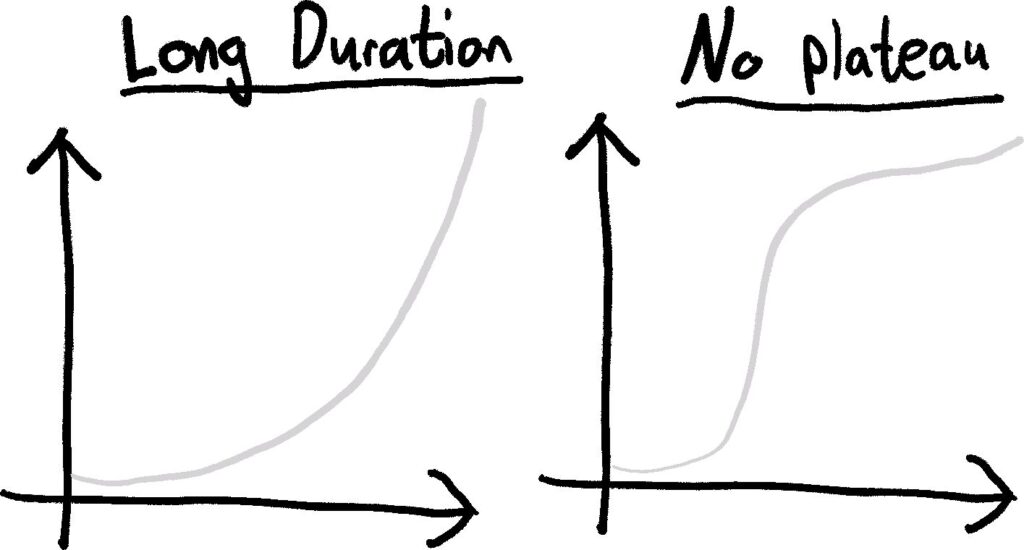
Here, having an steep learning curve is to your detriment: It makes it easier for others to work on your level.
Note: A steep learning curve can be okay if: 1) The curve continues beyond a few months, making it difficult for others to catch upon 2) the steep learning curve does not end in a plateau after a short amount of time.
Does it pass the College Student Test?
When choosing courses at university, think: Is this something I could easily learn outside of university? Is it something I would actually bother to learn? Does it pass the College Student Test?
Implementing a simple machine learning model might be something you could learn outside of university. Knowing the deeper theory around how it actually works is (probably) not.
So: Be wary when a service or a course positions itself as having no learning curve and being easy to pick up. Usually, that’s not a good thing for your long-term career prospects.
